
Yes – Nepal’s major trekking routes are safe and open right now. The August 26, 2026 flash floods affected the Rasuwagadi border region and Langtang Valley specifically, but Everest Base Camp, Annapurna, Manaslu, and Upper Mustang treks are operating without disruption. As of September 11, the Langtang Valley upper trail is confirmed intact and partial access is now available via an alternate road route; the direct Syabrubesi approach remains disrupted. If your trek is to Everest, Annapurna, Manaslu, or Mustang – there is no reason to cancel or delay.
On August 26, 2026, flash floods tore through the Rasuwagadi border crossing between Nepal and China (Tibet), sending the Bhote Koshi and Trishuli rivers surging through Rasuwa District. News headlines spread fast, and trekkers planning autumn trips began asking the same question: is Nepal still safe to visit?
The short answer – for almost every major trekking destination in Nepal – is yes. The floods hit a single corridor in the northern Rasuwa District. The Everest, Annapurna, Manaslu, and Upper Mustang regions sit in entirely separate mountain systems, hundreds of kilometers away, with no shared roads, rivers, or infrastructure.
Two weeks on, the Langtang picture is evolving. This article gives you the factual breakdown: what happened at the Nepal-China border, exactly which routes are affected, and where the Langtang recovery stands as of September 11, 2026.
What Happened at the Nepal-China Border on August 26, 2026?
Heavy monsoon rainfall caused flash flooding at the Rasuwagadi border crossing on August 26-27, 2026 – damaging roads, bridges, and infrastructure throughout Rasuwa District.
The Bhote Koshi and Trishuli rivers broke their banks after sustained rainfall in the catchment area straddling the Nepal-Tibet border. The flooding was severe enough to halt the Kailash Mansarovar Yatra – a high-altitude pilgrimage group was at the Rasuwagadi border crossing when conditions became impassable. Nepal Army search and rescue teams have been working in the area since August 27.
Lower Langtang Valley bore the brunt of the trail damage – roads, bridges, and settlement structures between Syabrubesi and Lama Hotel were hit. Mobile networks and electrical infrastructure in Rasuwagadi were knocked out. The Kathmandu-Pokhara highway, which runs well south of the affected area, has since fully reopened.
Which specific areas are confirmed off-limits?
- Rasuwagadi border crossing and surrounding settlements (roads, bridges, infrastructure damaged)
- Langtang Valley lower corridor – Syabrubesi and approaches (direct road access still disrupted; partial trail access now via alternate route – see update below)
- Tamang Heritage Trek – Briddim and surrounding villages lie in the same affected corridor (still avoid)
Which Trekking Routes in Nepal Are Safe and Open Right Now?
The vast majority of Nepal’s trekking network is completely unaffected. Here is the confirmed status as of September 1, 2026:
| Trek | Status | Distance from Affected Area |
| Everest Base Camp | Safe & Open | 180+ km east of Rasuwagadi |
| Gokyo Lakes Circuit | Safe & Open | 190+ km east |
| Everest Three Passes | Safe & Open | 185+ km east |
| Annapurna Circuit | Safe & Open | 200+ km west |
| Annapurna Base Camp | Safe & Open | 220+ km west |
| Manaslu Circuit | Safe & Open | 100+ km west |
| Upper Mustang | Safe & Open | 280+ km northwest |
| Langtang Valley | PARTIAL ACCESS | Directly affected |
| Tamang Heritage Trek | AVOID | Directly affected |
| Kailash Yatra (via Rasuwagadi) | HALTED | Directly affected |
The Kathmandu-Pokhara highway is fully operational. Domestic flights to Lukla (for Everest treks), Jomsom (for Mustang), and Pokhara (for Annapurna treks) are running on normal schedules.
Langtang Valley – Two-Week Recovery Update (September 11, 2026)
Status changed from AVOID to PARTIAL ACCESS. The upper Langtang trekking trail is confirmed intact. An alternate road route via Nuwakot-Dunche is now operational for light vehicles. Experienced trekkers with a licensed local guide can begin planning October departures – but this is not yet suitable for independent or first-time trekkers.
Two weeks of active recovery work in Rasuwa District have changed the Langtang picture meaningfully. Here is what our field team and partner operators have confirmed as of this week:
What is intact?
- Upper trekking trail confirmed intact: The trail sections from Bamboo through Lama Hotel, Langtang Village, and up to Kyanjin Gompa (3,870m / 12,697ft) have sustained no reported damage. The flood impact was concentrated in the lower valley and the approach road corridor.
- Kyanjin Gompa teahouses: Upper valley teahouses are reported operational. No structural damage to Ghora Tabela, Langtang village, or Kyanjin Gompa area.
What has changed in the last two weeks?
- Alternate road route via Nuwakot-Dunche now operating: Light vehicles (microbuses, cars, motorcycles) can now reach Dunche from Kathmandu via Nuwakot, bypassing the flood-damaged Pasang Lhamu Highway section. This is slower and rougher than the direct route but functional.
- Bailey bridges being deployed: Nepal Army engineers are installing temporary Bailey bridges at key crossing points along the flood corridor. Several are already in place.
- Nepal Government publishing official alternate routes: The Government of Nepal has begun formally publishing alternate road alignments for the Rasuwa corridor. This signals structured recovery rather than improvised access.
- Alternative trail entry point: The Chisapani – Gosaikunda – Thulo Syabru – Bamboo approach provides a trekking-only entry that avoids the damaged Syabrubesi section entirely. This is longer (add 2-3 days) but fully passable.
What is still disrupted?
- Direct Syabrubesi road access: The main Pasang Lhamu Highway to Syabrubesi remains damaged and is not recommended for standard vehicle travel. Syabrubesi town itself sustained significant structural damage in the flood.
- Tamang Heritage Trek: The Briddim corridor remains in the directly affected zone. Still not recommended.
- Rasuwagadi border crossing: Still closed. Kailash Yatra via this route remains halted.
Who can trek Langtang now?
With the alternate Dunche access and the intact upper trail, experienced trekkers using a licensed local guide who can confirm current field conditions have a viable route for October 2026. This is not standard season-opening access – it requires:
- A licensed local guide or operator with real-time field contacts in the Rasuwa area
- Flexibility on the approach (Nuwakot-Dunche road adds time and changes logistics)
- Willingness to enter via Gosaikunda if road conditions change before departure
- Confirmation of specific bridge and trail status no more than 48-72 hours before setting out
Independent trekkers without local support and first-time Langtang trekkers should wait for full road restoration, which field estimates suggest is approximately 3-4 weeks away (late September to mid-October). If you’re booked for late October or November, the situation should be well-resolved before your departure date.
Prime Himalayas is actively assessing October Langtang departures on a case-by-case basis. If you have a booking, contact our team directly – we are not doing blanket postponements.
Is the Everest Base Camp Trek Safe After the 2026 Floods?
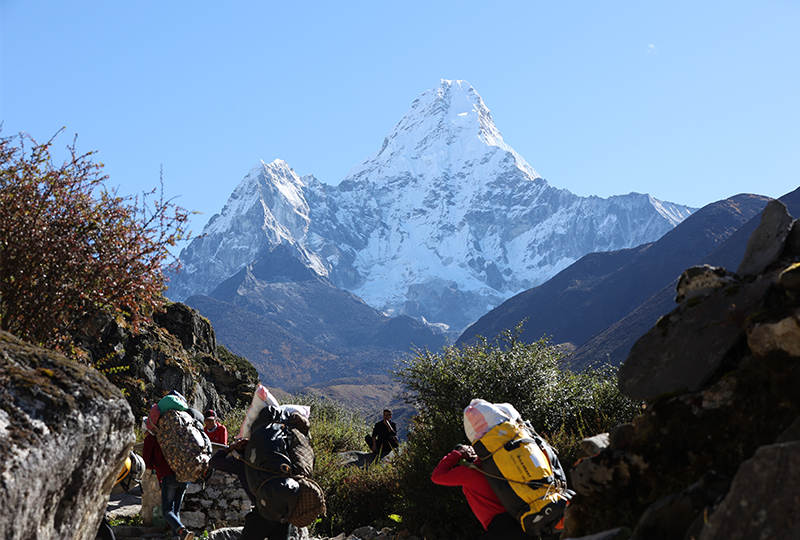
Yes, completely. The Rasuwagadi flood zone and the Everest trail are in entirely separate districts with no shared infrastructure or river systems.
The Everest Base Camp trek begins from Lukla (2,860m / 9,383ft) in Solukhumbu District – over 180 km east of the flood-affected Rasuwa District. The two regions are separated by multiple mountain ridges and operate on completely different river systems.
Namche Bazaar, Tengboche, Dingboche, and Gorak Shep are all open and operational. Teahouses on the Everest trail are reporting normal bookings and the Sagarmatha National Park permit system is functioning without interruption. Helicopter rescue services from Lukla and above are fully operational.
For autumn 2026 departures on the Everest Base Camp Trek, there is no reason whatsoever to change your plans.
Is the Annapurna Region Safe for Trekking Right Now?
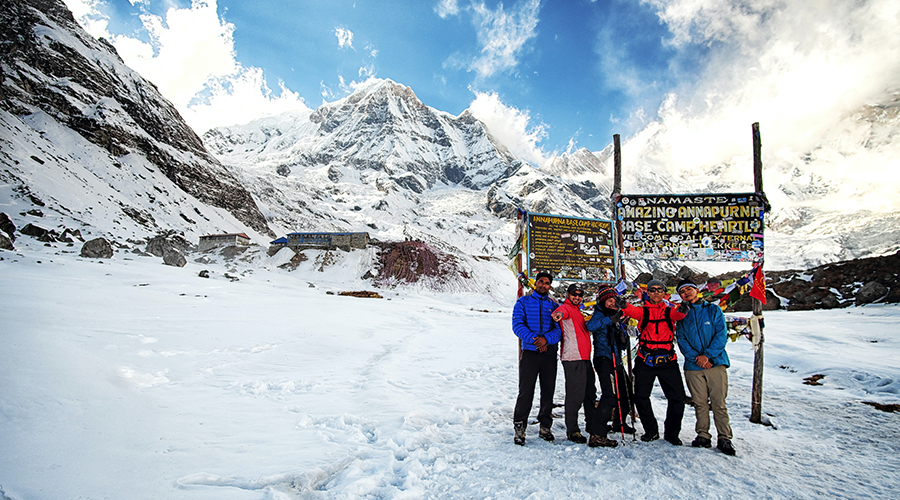
Completely safe. The Annapurna Conservation Area sits in Gandaki Province, geographically isolated from Rasuwa District by multiple Himalayan ranges.
The Annapurna Circuit (160-230 km, 12-21 days) and Annapurna Base Camp (5,364m / 17,598ft, 9-12 days) treks are operating without any disruption. Permit offices in Kathmandu and Pokhara are issuing the Annapurna Conservation Area permit (USD 30) and TIMS card (USD 20) normally.
Our guides recommend starting the Thorong La Pass crossing (5,416m / 17,769ft) before 5 a.m. to avoid afternoon wind and ensure you reach Muktinath (3,760m / 12,336ft) well before dark. This is standard advice in any season – it has nothing to do with the floods and everything to do with how the Himalayan weather works.
The Annapurna Circuit Trek remains one of the world’s great long-distance walks and autumn 2026 conditions are shaping up to be ideal.
What About the Manaslu Circuit and Upper Mustang?
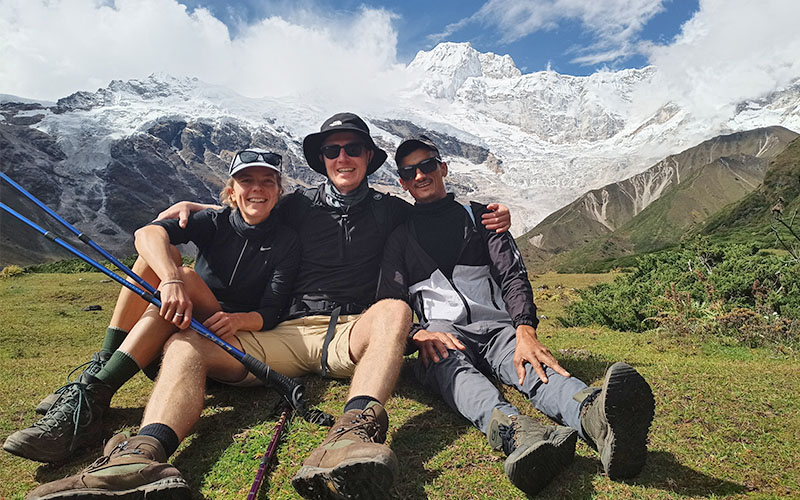
Both are safe, open, and issuing permits normally.
Manaslu Circuit Trek
The Manaslu Circuit (177 km, 14-18 days) circles Mt. Manaslu (8,163m / 26,781ft) through the Gorkha and Manang Districts – well clear of the Rasuwa flood zone. The restricted area permit (USD 100 per week during peak season, Oct-Nov) is being issued without delays in Kathmandu.
The Larkya La Pass crossing (5,106m / 16,752ft) is unaffected. A word from our team: most first-time trekkers underestimate the descent from Larkya La to Deurali – it is longer and more exposed than the ascent, so the two acclimatization days in Samagaon matter far more than they appear on paper. Build them in, no matter how good you feel.
See the full Manaslu Circuit Trek itinerary for 2026 departure dates.
Upper Mustang Trek
Upper Mustang (above Lo Manthang, 3,840m / 12,598ft) sits in the rain shadow of the Annapurna-Dhaulagiri massif – it receives minimal monsoon rainfall in any year. The Mustang Restricted Area permit (USD 500 for 10 days) is being issued normally, and the region is unaffected by the Rasuwa flooding.
Because of its sheltered position north of the main Himalayan barrier, late August through November is actually one of the best windows to visit Mustang. While the rest of Nepal wraps up the monsoon season, Lo Manthang and the surrounding plateau stay clear and accessible.
Full details on the Upper Mustang Trek including 2026 permit logistics.
Should I Cancel My Nepal Trek Because of the Floods?
For Everest, Annapurna, Manaslu, and Upper Mustang: absolutely not. Cancel nothing.
For Langtang Valley: the picture has changed in the past two weeks. Blanket cancellation is no longer the right call. If your departure is in late October or November, the situation will very likely be fully resolved before you travel. If you’re booked for September or early October, contact your operator to discuss the alternate-route option or a reroute.
For Tamang Heritage Trek: still postpone until Briddim-area infrastructure is confirmed safe. No timeline is available for this route yet.
If you have a Langtang or Tamang Heritage Trek booked with Prime Himalayas for autumn 2026, our team will contact you directly. Several alternative routes in the Helambu and Gosaikunda areas are also operational and offer a comparable Rasuwa highlands experience. Do not cancel before speaking with us.
Booking a Different Trek? If you had a Langtang Trek planned for September or early October 2026 and want a comparable alternative right now, the Manaslu Circuit is the closest match – similar duration (14-18 days), similar remoteness, and equally spectacular. Prime Himalayas can transfer your booking with no rerouting fee.
Is Autumn 2026 Still a Good Time to Trek in Nepal?
Yes – autumn remains Nepal’s premier trekking season, and the flood has not changed that for any safe destination.
October and November bring the most stable trekking weather of the year. September is the tail end of monsoon season, but conditions at altitude clear rapidly as the month progresses. By early October, skies across the Everest, Annapurna, Manaslu, and Mustang regions are typically settled and clear.
Autumn 2026 conditions at a glance:
- Daytime temperatures at 3,500m: 5-15°C (41-59°F) in October – comfortable for walking
- Mountain visibility: best of the year post-monsoon, with clear views from Kala Patthar, Thorong La, and Larkya La
- Trail conditions: fresh from monsoon rains, vegetation green and clear of dust
- Teahouse availability: peak season – book accommodation in advance on the busiest sections of EBC and Annapurna Circuit
The heightened attention on trail safety after the Rasuwa floods has actually prompted operators across Nepal – including Prime Himalayas – to tighten their pre-departure route checks. Every trek we operate this autumn gets a confirmed trail status from our field staff before the first client boots hit the ground.
Frequently Asked Questions
Yes. Nepal’s major trekking routes – Everest Base Camp, Annapurna Circuit and Base Camp, Manaslu Circuit, and Upper Mustang – are safe and fully operational. Only the Langtang Valley, Tamang Heritage Trek, and Rasuwagadi border zone are affected and should be avoided until Rasuwa District infrastructure is restored.
ANo longer completely closed. As of September 11, 2026, the upper trekking trail (Bamboo through Kyanjin Gompa) is confirmed intact, and an alternate road route via Nuwakot-Dunche is operational for light vehicles. The direct road to Syabrubesi remains disrupted. Experienced trekkers with a local guide can now plan Langtang departures for October. Independent trekkers and first-timers should wait for full road restoration, expected in approximately 3-4 weeks. If you have a booking, contact your operator to assess your specific dates rather than cancelling outright.
Over 180 km. The EBC trek starts from Lukla in Solukhumbu District – a completely different region with no shared rivers, roads, or infrastructure. The two routes are separated by multiple mountain ridges. There is zero impact on any Everest-area trekking.
For all routes except Tamang Heritage Trek, yes – autumn 2026 departures are proceeding as scheduled. Langtang Valley bookings for late October and November are expected to run normally as road access is restored. October and November are Nepal’s best trekking months and the flood has not changed that for Everest, Annapurna, Manaslu, or Mustang.
Yes. Tribhuvan International Airport (Kathmandu), Tenzing-Hillary Airport (Lukla), and Pokhara International Airport are all operating on normal schedules. The flooding has not affected flight operations to any major trekking hub.
Don’t cancel outright – especially if your departure is late October or November. For Langtang bookings, contact your operator to discuss the alternate-access option or a reroute to Helambu, Gosaikunda, or the Manaslu Circuit on a similar timeline. For Tamang Heritage Trek bookings, a reroute is recommended until Briddim-area infrastructure is confirmed safe. Prime Himalayas is working through affected bookings individually – get in touch before making any changes.
Your Trek Is Still On – Let’s Make It Happen
Everest, Annapurna, Manaslu, and Upper Mustang are open, safe, and ready for autumn 2026. Our team monitors trail conditions daily and confirms every route before departure. Whether you’re locking in dates, rerouting a Langtang booking, or starting from scratch – we’ll build the right trek for your schedule.