
The Mardi Himal Trek is shorter, cheaper, and easier, making it ideal for trekkers with 5-7 days and a moderate fitness level. The Annapurna Base Camp Trek is longer and climbs higher into the Annapurna Sanctuary, rewarding trekkers with a full 360-degree mountain amphitheater view. If you have limited time or want a quieter trail, choose Mardi Himal. If you want the classic, more dramatic Annapurna experience and have 9-11 days, choose Annapurna Base Camp.
Trekkers planning a trip to Nepal’s Annapurna region almost always land on the same question: Mardi Himal Trek vs Annapurna Base Camp Trek – which one is worth the flight, the vacation days, and the training?
Both treks start near Pokhara. Both put you face-to-face with Machapuchare (Fishtail), one of Nepal’s most sacred and photogenic peaks. But the routes differ in altitude, crowd levels, cost, and physical demand. This guide breaks down both trails point by point, using real trip data from Prime Himalayas so you can book the right trek the first time.
What Is the Mardi Himal Trek?
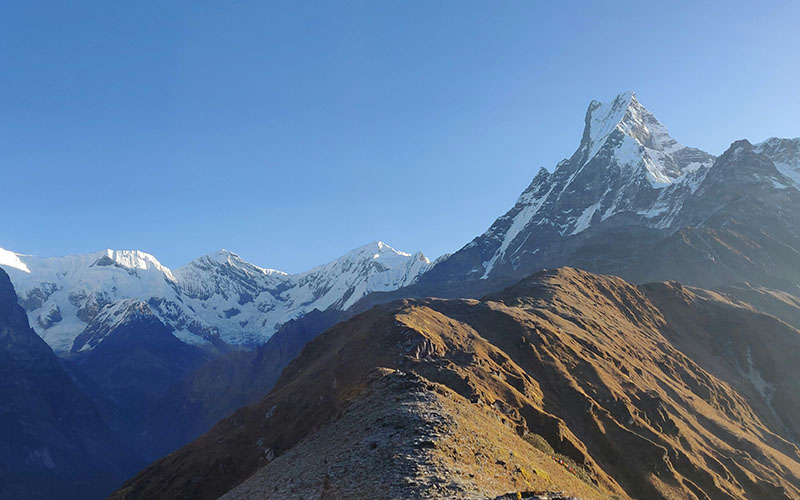
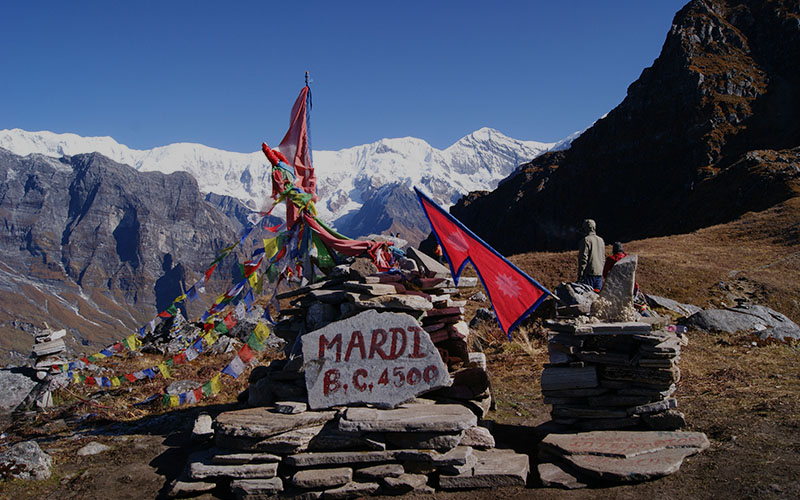
The Mardi Himal Trek is a moderate, 5-7 day trek to Mardi Himal Base Camp at 4,500 m (14,764 ft), tucked between the Annapurna and Machapuchare massifs.
Route and Highlights
The trail climbs through rhododendron and oak forest from Kande or Australian Camp, up through Low Camp and High Camp, before opening onto the ridge below Mardi Himal Base Camp. Unlike the Annapurna Circuit or ABC trails, Mardi Himal sees far fewer trekkers, so teahouses stay quieter even in peak season.
- Duration: 5-7 days (trek only); 7-9 days including Kathmandu and Pokhara
- Maximum altitude: 4,500 m / 14,764 ft (Mardi Himal Base Camp viewpoint)
- Starting point: Kande, roughly 1.5 hours from Pokhara
- Difficulty: Moderate
- Average cost: USD 500-800 for a standard teahouse package
What Is the Annapurna Base Camp Trek?
The Annapurna Base Camp Trek is a 9-11 day trek into the Annapurna Sanctuary, a natural amphitheater ringed by Annapurna I (8,091 m), Machapuchare, Hiunchuli, and Gangapurna, ending at ABC itself at 4,130 m (13,549 ft).
Route and Highlights
Starting from Nayapul, the trail passes through Ghandruk and Chhomrong – two of the most iconic Gurung villages in the region – before entering the Modi Khola gorge and climbing into the Sanctuary. Our guides at Prime Himalayas often describe the final approach to ABC as the single most dramatic mountain reveal in the Annapurna region.
- Duration: 9-11 days (trek only); 11-13 days including Kathmandu and Pokhara
- Maximum altitude: 4,130 m / 13,549 ft (Annapurna Base Camp)
- Starting point: Nayapul, about 1 hour from Pokhara
- Difficulty: Moderate to challenging
- Average cost: USD 700-1,200 for a standard teahouse package
Day to Day Itinerary: Mardi Himal Trek (9 Days)
Here is a typical day-by-day breakdown our guides use for the standard Mardi Himal Trek, including transfers to and from Pokhara:
Day 1 : Arrival in Kathmandu
Day 2 : Drive to Pokhara
Day 3 : Drive and Trek to Pritam Deurali
Day 4: Trek to Low Camp
Day 5: Ascend to High Camp
Day 6: Mardi Himal Base Camp Trek and Return
Day 7: Trek to Sidding and Transfer to Pokhara
Day 8: Fly to Kathmandu and Explore Thamel
Day 9: Departure
Planning the Mardi Himal Trek?
Prime Himalayas runs small-group and private departures on the Mardi Himal Trek with flexible start dates and a licensed local guide included.
→ View Mardi Himal Trek Itinerary & Price

Day to Day Itinerary: Annapurna Base Camp Trek (13 Days)
The Annapurna Base Camp Trek follows a longer, more gradual ascent profile to allow the body to adjust to altitude:
Day 1 – Arrival in Kathmandu
Day 2 – Journey to Pokhara
Day 3 – Pokhara to Nayapul, Trek to Ulleri
Day 4 – Ulleri to Ghorepani
Day 5 – Sunrise at Poonhill, Trek to Tadapani
Day 6 – Tadapani to Chhomrong
Day 7: Chhomrong to Himalaya Hotel
Day 8: Annapurna Base Camp
Day 9: ABC to Bamboo/Dovan
Day 10: Trek to Jhinu
Day 11: Jhinu to Nayapul, Drive to Pokhara
Day 12: Return to Kathmandu
Day 13: Departure
Planning the Annapurna Base Camp Trek?
Prime Himalayas’ Annapurna Base Camp Trek package includes teahouse accommodation, permits, and an experienced guide from Pokhara to the Sanctuary and back.
→ View Annapurna Base Camp Trek Itinerary & Price
Both itineraries can be shortened or extended by a day or two depending on fitness level and flight schedules. Prime Himalayas builds each itinerary around the trekker’s dates rather than forcing a fixed departure.
What Is Food and Accommodation Like on Each Trek?
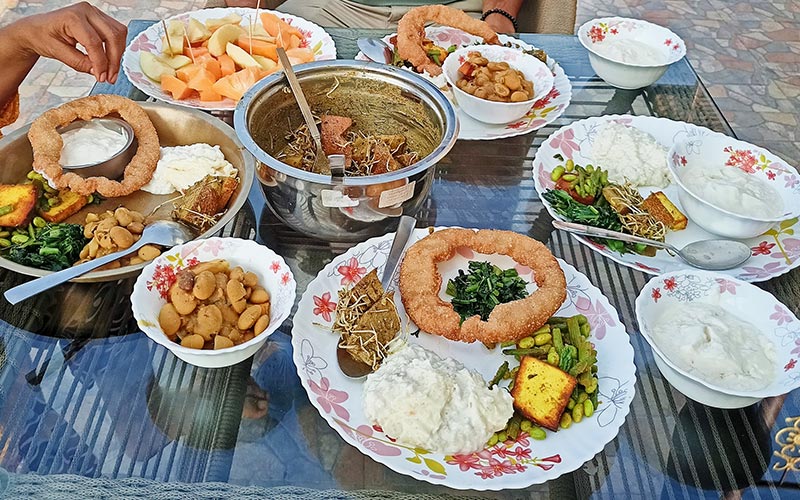
Both treks use the teahouse system common across the Annapurna region: simple guesthouses with twin-share rooms, shared bathrooms at lower elevations, and basic attached bathrooms closer to Base Camp.
Mardi Himal Teahouses
- Fewer teahouses per stop, so rooms can fill up faster in peak season
- Simple menus: dal bhat, noodles, soup, eggs, and basic pasta dishes
- Limited Wi-Fi and charging above Low Camp; carry a power bank
Annapurna Base Camp Teahouses
- Larger, more established lodges with wider menus, including pizza and momos
- Hot showers available (usually for a small fee) at most stops
- Better Wi-Fi coverage due to higher trekker volume
Most trekkers experience a noticeable drop in menu variety and Wi-Fi speed above 3,500 m on both routes, so it helps to set expectations early.
How Should You Train for Mardi Himal or Annapurna Base Camp?
Both treks reward basic cardiovascular fitness and leg strength rather than technical climbing skill. Our guides recommend starting preparation 6-8 weeks before departure.
- Build up to 3-4 hikes per week with a loaded daypack (6-8 kg)
- Add stair climbing or hill repeats to prepare for the steep stone steps near Chhomrong and Ulleri
- Include 1-2 cardio sessions weekly (running, cycling, or swimming) to improve endurance at altitude
- Practice with the boots you plan to wear on trek to avoid blisters
Because the Annapurna Base Camp Trek involves more consecutive trekking days, we suggest slightly higher training volume for ABC than for Mardi Himal.
What Permits Do You Need for These Treks?
Both the Mardi Himal Trek and the Annapurna Base Camp Trek fall within the Annapurna Conservation Area, so the permit requirements are identical for both routes.
- ACAP (Annapurna Conservation Area Permit): required for entry into the conservation area
- TIMS Card (Trekkers’ Information Management System): tracks trekker movement for safety
- Both permits are arranged in Kathmandu or Pokhara and included in standard Prime Himalayas packages
Neither trek requires a restricted-area permit, unlike routes such as Upper Mustang or Manaslu, which keeps the paperwork simple for both options.
Mardi Himal Trek vs Annapurna Base Camp Trek: Key Differences at a Glance
Here is how the two treks compare side by side on the factors that matter most when booking:
| Factor | Mardi Himal Trek | Annapurna Base Camp Trek |
| Duration | 5-7 days | 9-11 days |
| Max Altitude | 4,500 m / 14,764 ft | 4,130 m / 13,549 ft |
| Difficulty | Moderate | Moderate to challenging |
| Daily Walking Hours | 4-6 hours | 5-7 hours |
| Crowd Level | Low | Moderate to high in peak season |
| Estimated Cost | USD 700-990 | USD 900-1,690 |
| Best For | Short trips, first-timers, tight schedules | Trekkers wanting the classic Sanctuary panorama |
| Permits Required | ACAP + TIMS | ACAP + TIMS |
Which Trek Is More Difficult: Mardi Himal or Annapurna Base Camp?
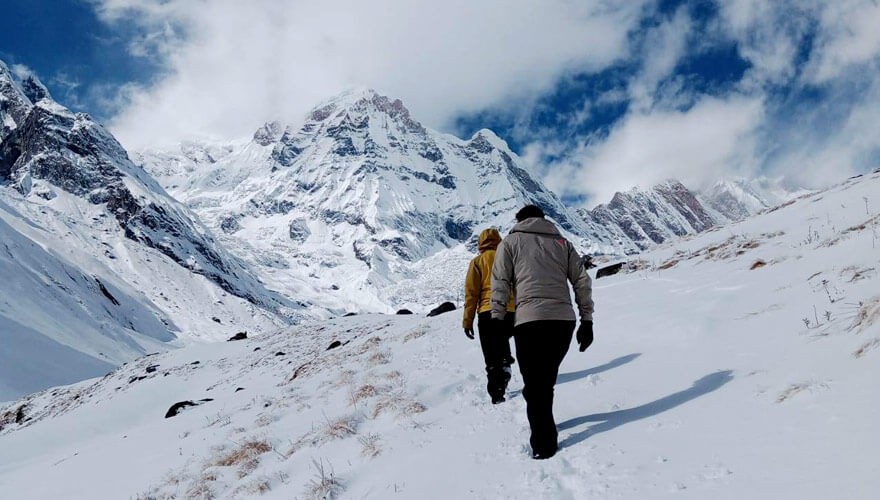
The Annapurna Base Camp Trek is physically harder because of its longer duration and steeper, stone-stepped sections between Chhomrong and the Sanctuary. Mardi Himal is shorter and gentler, but its final push to Base Camp above 4,000 m still demands good fitness.
What Makes Each Trek Challenging
- Mardi Himal: steep, narrow ridge trail near High Camp; thinner crowds mean less-packed snow on the trail in winter
- ABC: repeated steep stone staircases around Chhomrong and Sinuwa; longer consecutive trekking days increase cumulative fatigue
Most trekkers experience mild altitude symptoms on both routes above 3,500 m. Because Mardi Himal’s ascent to Base Camp is faster, we recommend an extra acclimatization night at High Camp for anyone prone to altitude headaches.
How Much Does Each Trek Cost?
A standard Mardi Himal Trek package typically runs USD 500-800 per person, while an Annapurna Base Camp Trek package runs USD 700-1,200 per person, depending on group size, season, and whether you add a Jeep return from Ghandruk instead of walking out.
What the Cost Includes
- Teahouse accommodation along the route
- A licensed English-speaking guide and porter
- ACAP (Annapurna Conservation Area Permit) and TIMS card fees
- Airport and Pokhara transfers
For a detailed day-by-day cost breakdown of the longer route, see our Annapurna Base Camp Trek cost guide.
Which Trek Has Better Mountain Views?
The Annapurna Base Camp Trek delivers a wider, more dramatic panorama because the trail ends inside the Annapurna Sanctuary, surrounded on all sides by 7,000-8,000 m peaks. Mardi Himal offers a narrower but strikingly close view of Machapuchare’s south face.
- ABC Sanctuary view: Annapurna I, Annapurna South, Hiunchuli, Gangapurna, Machapuchare – a full amphitheater
- Mardi Himal view: a close, elevated angle on Machapuchare and the Mardi Himal ridge, with fewer trekkers in the frame
Our guides recommend Mardi Himal to photographers who want an uncrowded viewpoint, and ABC to trekkers who want the single most complete Annapurna panorama available on a teahouse trek.
How Many Days Do You Need for Each Trek?
Budget 7-9 total days in Nepal for the Mardi Himal Trek and 11-13 total days for the Annapurna Base Camp Trek, including arrival, a night in Kathmandu, and the flight or drive to Pokhara.
- Mardi Himal: 1 day Kathmandu, 1 day transfer to Pokhara, 5 days trekking, 1 day buffer
- ABC: 1 day Kathmandu, 1 day transfer to Pokhara, 8-9 days trekking, 1-2 days buffer
If your vacation time is capped at one week, Mardi Himal fits comfortably. If you can take 12+ days off, ABC is the better use of the extra time.
What Is the Best Season to Trek Mardi Himal or Annapurna Base Camp?
Spring (March-May) and autumn (September-November) are the best seasons for both treks, offering stable weather, clear mountain views, and safer trail conditions.
- Spring: rhododendron blooms line the Mardi Himal forest trail; ABC sees warmer nights at Base Camp
- Autumn: the clearest skies of the year for both routes, right after the monsoon
- Winter (Dec-Feb): Mardi Himal is doable with proper gear; ABC can involve snow-blocked trails above Deurali
For a season-by-season breakdown of the longer trek, see our guide on the best time to trek Annapurna Base Camp.
Which Trek Is Better for First-Time Trekkers?
Mardi Himal is generally the better choice for first-time trekkers because it is shorter, less crowded, and easier to fit into a one-week trip without sacrificing the feeling of standing close to an 8,000 m giant.
Experienced trekkers, or first-timers with strong cardio fitness and 10+ days available, tend to prefer Annapurna Base Camp for its longer immersion in the mountains and the payoff of the full Sanctuary view.
If neither route fits your schedule, it’s worth browsing our roundup of the best short treks in Nepal for other Annapurna region options under a week.
Can You Combine the Mardi Himal and Annapurna Base Camp Treks?
Yes. Some trekkers with 14+ days combine both routes into a single extended Annapurna region itinerary, typically trekking Mardi Himal first as an acclimatization warm-up before flying home via Pokhara, or linking the two via a shared trailhead near Pokhara with an extra rest day in between.
Prime Himalayas can customize a combined itinerary on request – this is one of the most common questions our repeat trekkers ask once they’ve done one of the two routes and want to come back for the other.
Mardi Himal or Annapurna Base Camp: Which Should You Book?
After guiding trekkers on both routes for years, our take at Prime Himalayas is simple: match the trek to your calendar and your appetite for a longer mountain immersion, not just to the photos you’ve seen online.
- Choose Mardi Himal if: you have 7-9 days total, want a quieter trail, and prefer a lower budget without giving up big mountain views
- Choose Annapurna Base Camp if: you have 11-13 days total, want the complete Sanctuary panorama, and don’t mind a busier trail in peak season
- Choose both if: you have 14+ days and want to experience the full range of Annapurna region trekking in a single trip
Neither trek is objectively “better” – they simply serve different trip lengths and different appetites for crowd levels. Most first-time trekkers who ask us this question end up choosing based on how many vacation days they can realistically take, and that’s the right starting point.
Frequently Asked Questions
Which is better, Mardi Himal Trek or Annapurna Base Camp Trek?
It depends on your time and fitness. Mardi Himal is shorter, cheaper, and less crowded; Annapurna Base Camp is longer and offers a wider mountain panorama from inside the Annapurna Sanctuary.
Is the Mardi Himal Trek suitable for beginners?
Yes. With moderate daily walking of 4-6 hours and no technical climbing, Mardi Himal is a good introduction to Himalayan trekking for reasonably fit beginners.
How high is the Annapurna Base Camp Trek compared to Mardi Himal?
Annapurna Base Camp sits at 4,130 m (13,549 ft), while the Mardi Himal Base Camp viewpoint reaches a slightly higher 4,500 m (14,764 ft).
Do I need a permit for Mardi Himal or Annapurna Base Camp Trek?
Both treks require an ACAP (Annapurna Conservation Area Permit) and a TIMS card, both of which Prime Himalayas arranges as part of standard trek packages.
Can I do either trek without a guide?
Independent trekking is legally restricted in the Annapurna Conservation Area without a licensed guide. Prime Himalayas provides local guides for both routes.
Which trek has better teahouses, Mardi Himal or ABC?
Annapurna Base Camp has more established teahouses with wider menus and hot showers, since it is a longer-running, higher-traffic route. Mardi Himal’s teahouses are simpler but comfortable and far quieter.
Ready to Choose Your Himalayan Adventure?
Whether you pick the quiet ridgelines of Mardi Himal or the dramatic amphitheater of the Annapurna Base Camp Trek, Prime Himalayas’ local guides can build an itinerary around your fitness level, budget, and travel dates.