
Both treks are iconic Himalayan circuits offering stunning scenery, cultural richness, and high-altitude adventure. The Annapurna Circuit Trek is longer, more established, and best for trekkers who want diverse landscapes and teahouse comfort. The Manaslu Circuit Trek is wilder, less crowded, and more restricted — perfect for adventurers who want a raw, off-the-beaten-path experience. Your best choice depends on your experience level, budget, and appetite for solitude.
Two of Nepal’s Greatest Trekking Loops
Nepal is home to some of the world’s most spectacular trekking routes — and the Annapurna Circuit and Manaslu Circuit sit at the very top. Both take you around a towering Himalayan massif, crossing dramatic high passes and passing through traditional mountain villages.
But they’re very different experiences. One is a well-trodden classic; the other is a restricted-access wilderness gem. Understanding what sets them apart is the key to choosing the right adventure for you.
Annapurna Circuit Trek
- Most popular circuit trek in Nepal
- Well-developed teahouse infrastructure
- Open to all nationalities — no special permit needed
- Diverse scenery: subtropical to alpine desert
- Excellent acclimatization profile• Road access in some sections
Manaslu Circuit Trek
- Restricted area — authentic wilderness feel
- Far fewer trekkers — true solitude
- Rugged and more challenging terrain
- Deep cultural immersion in Tibetan-influenced villages
- No road intrusions on the main trail• Optional extension to Tsum Valley
At a Glance: Key Facts & Statistics
| Category | Annapurna Circuit | Manaslu Circuit |
| Duration | 14–21 Days | 14–17 Days |
| Max Altitude | 5,416 m / 17,769 ft (Thorong La) | 5,106 m / 16,752 ft (Larkya La) |
| Distance | ~160–230 km | ~177 km |
| Difficulty | Moderate to Strenuous | Strenuous |
| Teahouse Quality | Good to Excellent | Basic to Moderate |
| Crowd Level | High (especially Oct–Nov) | Low to Moderate |
| Special Permit | Not Required (ACAP + TIMS) | Required (Restricted Area) |
| Permit Cost (approx.) | USD $30–40 | USD $100+ per week |
| Best Seasons | Mar–May, Sep–Nov | Mar–May, Sep–Nov |
| Access Point | Besisahar (from Kathmandu) | Soti Khola (from Kathmandu) |
| End Point | Nayapul or Pokhara | Dharapani (connects to AC) |
| Guides Required | Optional (recommended) | Mandatory |
| Min. Group Size | Solo OK | Minimum 2 trekkers |
Route & Itinerary Breakdown
Annapurna Circuit Trek — Route Overview
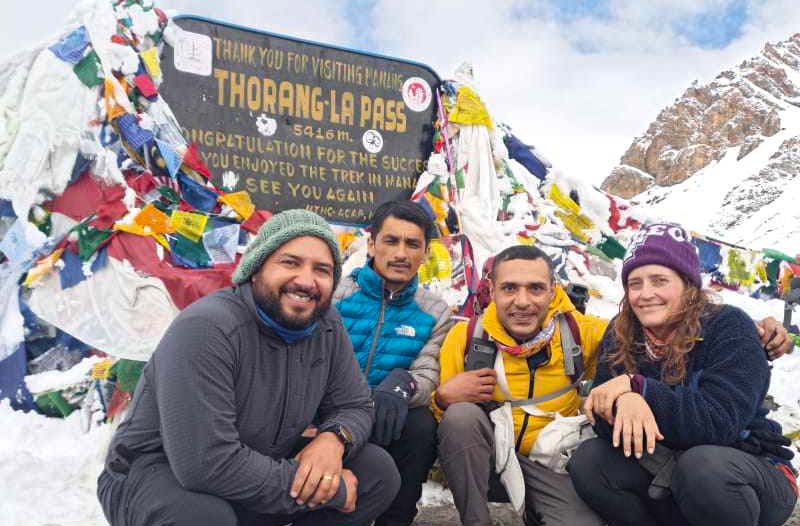
The classic Annapurna Circuit starts in Besisahar and takes you counterclockwise around the Annapurna massif. The route passes through lush subtropical forests in the lower Marsyangdi Valley, gaining altitude through Manang, and culminating in the legendary Thorong La Pass crossing at 5,416 m — one of the highest trekable passes in the world.
After the pass, the trail descends to the sacred temple town of Muktinath (a major Hindu and Buddhist pilgrimage site) before dropping into the Kali Gandaki Gorge — the world’s deepest gorge — and ending in Jomsom or continuing to Tatopani and Pokhara.
Standard Annapurna Circuit Itinerary (17 Days)
- Day 1–2: Kathmandu to Besisahar → Bulbule (800 m)
- Day 3–4: Bahundanda → Chame (2,710 m)
- Day 5–6: Pisang → Manang (3,519 m)
- Day 7: Acclimatization Day in Manang
- Day 8: Manang → Thorong Phedi (4,450 m)
- Day 9: CROSS THORONG LA PASS (5,416 m) → Muktinath (3,760 m)
- Day 10–11: Jomsom → Marpha → Tatopani
- Day 12–13: Ghorepani → Poon Hill → Nayapul
- Day 14: Drive or fly back to Pokhara
Manaslu Circuit Trek — Route Overview
The Manaslu Circuit begins at Soti Khola — a bumpy 7-hour drive from Kathmandu — and circles the world’s eighth-highest peak, Mt. Manaslu (8,163 m). The trail follows the Budhi Gandaki River through deep river gorges, bamboo forests, and terraced farmland before entering the high-altitude Nubri and Tsum valleys.
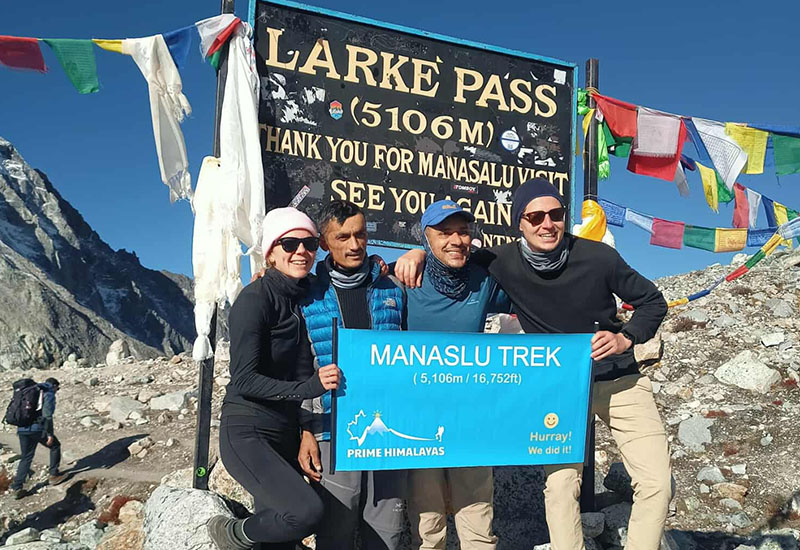
The highlight is the Larkya La Pass (5,106 m), a dramatic crossing with sweeping views of Himlung Himal, Cheo Himal, and Annapurna II. After the pass, the trail descends to Dharapani, which connects to the Annapurna Circuit — making a combined ‘Grand Circuit’ possible for ambitious trekkers.
Sample Manaslu Circuit Itinerary (15 Days)
- Day 1–2: Kathmandu to Soti Khola → Machhakhola (869 m)
- Day 3–4: Doban → Jagat (1,340 m)
- Day 5–6: Deng → Namrung (2,630 m)
- Day 7: Namrung → Samagaon (3,530 m)
- Day 8: Acclimatization in Samagaon
- Day 9: Samagaon → Samdo (3,865 m)
- Day 10: Samdo → Dharamsala / Larkya Base Camp (4,460 m)
- Day 11: CROSS LARKYA LA PASS (5,106 m) → Bimthang (3,590 m)
- Day 12–13: Dharapani → Besisahar → Drive to Kathmandu
Difficulty Comparison: Which Trek Is Harder?
The Manaslu Circuit is generally considered more challenging than the Annapurna Circuit. Trail conditions are rougher, teahouses are fewer, and the remote terrain leaves less margin for error. That said, Thorong La on the Annapurna Circuit is higher — making acclimatization more critical there.
Annapurna Circuit — Difficulty Details
The Annapurna Circuit is rated Moderate to Strenuous. The gradual elevation gain from 800 m to 5,416 m gives your body adequate time to acclimatize. Daily walking distances average 5–8 hours, and the teahouse infrastructure means you always have a warm bed and meal waiting.
The main challenge is the Thorong La crossing — a long, cold, and physically demanding day that starts before dawn. Altitude sickness is the primary concern. Some sections of the route (particularly near Chame and Manang) now have road access, reducing the wilderness feel slightly.
Manaslu Circuit — Difficulty Details
The Manaslu Circuit is rated Strenuous. The trail is wilder, with longer stretches between teahouses and fewer escape routes if things go wrong. Sections above Samagaon involve high-altitude camping-style lodges and more exposed ridge walking.
Larkya La Pass (5,106 m) is no walk in the park — the approach from Dharamsala requires an early start (2–4 AM), and the descent to Bimthang is steep and sometimes icy. That said, the lower maximum altitude than Thorong La slightly reduces hypoxia risk for most trekkers.
| Difficulty Factor | Annapurna Circuit | Manaslu Circuit |
| Max Pass Altitude | 5,416 m (Thorong La) | 5,106 m (Larkya La) |
| Trail Conditions | Well-maintained | Rough, remote sections |
| Altitude Sickness Risk | High (5,416 m) | Moderate-High (5,106 m) |
| Daily Walk Time | 5–8 hours avg. | 6–9 hours avg. |
| Teahouse Availability | Every 1–2 hours walking | Can be 4–6 hours apart |
| Rescue Options | Moderate — some road access | Limited — very remote |
| Overall Rating | Moderate–Strenuous ⭐⭐⭐ | Strenuous ⭐⭐⭐⭐ |
Scenery & Natural Highlights
Annapurna Circuit — What You’ll See
The Annapurna Circuit delivers an astonishing variety of landscapes in a single journey. You begin in steamy subtropical jungle before ascending through rhododendron and pine forests, then emerge into the stark, windswept trans-Himalayan desert of the Mustang region.
Highlights include the Marsyangdi Valley, Ice Lake near Manang, the dramatic Kali Gandaki Gorge, and the iconic sunrise from Poon Hill (3,210 m / 10,531 ft) at the end — offering panoramic views of Annapurna I (8,091 m / 26,545 ft), Dhaulagiri (8,167 m / 26,814 ft), Machhapuchhre (6,993 m / 22,943 ft), and more.
Marsyangdi River Valley — lush and dramatic gorge scenery
High Camp (4,925 m) — jaw-dropping views before the pass
Muktinath Temple — sacred site at 3,800 m
Kali Gandaki Gorge — world’s deepest gorge
Poon Hill Sunrise — classic Annapurna panorama
Thorong La Pass — one of the world’s highest trekable passes
Manaslu Circuit — What You’ll See
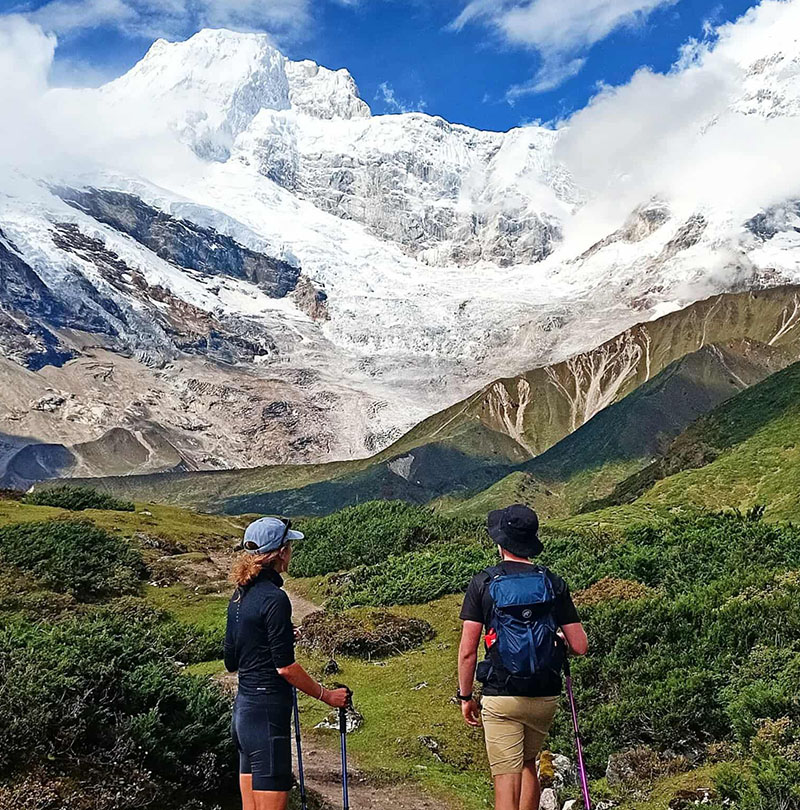
The Manaslu Circuit offers a more raw and untouched visual experience. Because fewer trekkers come here, you get the Himalayas as they’ve always been — without the crowds. The dominant visual is the sheer wall of Mt. Manaslu itself, which you walk beneath for nearly four days.
The approach to Larkya La is especially dramatic — surrounded by glaciers and high peaks including Himlung Himal (7,126 m) and Cheo Himal (6,820 m). The Tsum Valley side trip (optional) adds hidden Buddhist monasteries and ancient Tibetan culture to the mix.
- Budhi Gandaki Gorge — epic river canyon scenery
- Birendra Lake — high-altitude glacial lake near Samagaon
- Mt. Manaslu North Face — close-up views of the 8th highest peak
- Larkya La Glacier — vast ice fields and high alpine tundra
- Tsum Valley — one of Nepal’s most hidden Buddhist sanctuaries
- Pungen Glacier — short hike from Samagaon for close-up glacier views
Cultural Experience & Local Life
Annapurna Circuit — Culture
The Annapurna Circuit is a cultural kaleidoscope. As you trek, you pass through Hindu Gurung and Magar villages in the lower valleys, then Tibetan-Buddhist Manangba communities around Manang, and finally the Thakali people of the Mustang plateau — each with distinct traditions, architecture, and cuisine.
The ancient Muktinath temple and the Kagbeni village are especially rich in spiritual atmosphere. Festivals like Tiji (in Lo Manthang) and Mani Rimdu add another dimension if your timing aligns.
Manaslu Circuit — Culture
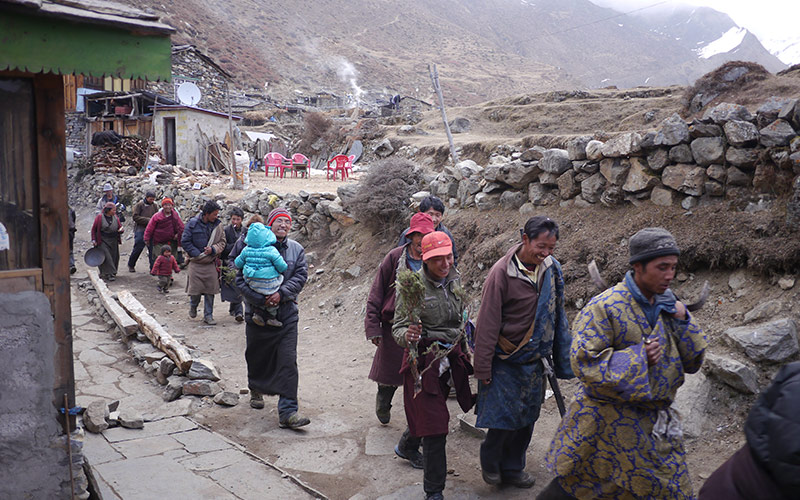
The Manaslu region is culturally Tibetan at its core. Upper villages like Samagaon, Samdo, and Lho are inhabited by Nubri and Tsum communities who have maintained their Tibetan Buddhist traditions largely untouched by modernity.
Ancient gompas (monasteries), carved mani walls, and prayer flag-draped hillsides are a constant presence. The restricted-area status has protected this cultural authenticity — here, you genuinely feel like you’ve stepped back in time. An optional extension to Tsum Valley (a sacred hidden valley) deepens the cultural experience significantly.
Permits, Regulations & Costs
Annapurna Circuit Permits
- ACAP (Annapurna Conservation Area Project): NPR 3,000 (~USD 22)
- TIMS Card (Trekkers’ Information Management System): NPR 2,000 (~USD 15)
- No guide mandatory — solo trekking is permitted
- Total permit cost: Approx. USD 35–50
Manaslu Circuit Permits
- Restricted Area Permit (RAP): USD 100 per week (Sept–Nov) / USD 75 per week (Dec–Aug)
- Manaslu Conservation Area Permit (MCAP): NPR 3,000 (~USD 22)
- Annapurna Conservation Area Permit (ACAP): NPR 3,000 (~USD 22) — if continuing to Annapurna
- Registered guide: Mandatory (minimum 1 licensed guide per group)
- Minimum group size: 2 trekkers required
- Total permit cost: Approx. USD 150–250 (varies by season and duration)
💡 Pro Tip on Permits Manaslu’s restricted area permit must be arranged through a registered trekking agency — you cannot obtain it independently. Book through a reputable Nepali operator well in advance, especially for peak season (October–November). Your agency handles all permit paperwork as part of the package.
| Cost Factor | Annapurna Circuit | Manaslu Circuit |
| Permit Fees | ~USD 35–50 | ~USD 150–250 |
| Guide (mandatory?) | Optional (~USD 25–30/day) | Mandatory (~USD 30–35/day) |
| Porter | Optional (~USD 15–20/day) | Recommended (~USD 18–22/day) |
| Teahouse Accommodation | USD 5–20/night (range) | USD 3–10/night (simpler) |
| Meals | USD 4–10/meal | USD 4–8/meal |
| Avg. Total Budget | USD 1,000–1,800 (14–17 days) | USD 1,500–2,500 (15 days) |
Best Time to Trek: Season by Season
| Season | Annapurna Circuit | Manaslu Circuit |
| Spring (Mar–May) | Excellent — rhododendron blooms, clear skies | Excellent — less rain, warm days |
| Summer / Monsoon (Jun–Aug) | Not recommended — heavy rain, trail damage | Not recommended (closed for most agencies) |
| Autumn (Sep–Nov) | BEST — crisp air, peak visibility, most popular | BEST — ideal conditions, most trekkers |
| Winter (Dec–Feb) | Possible but cold — Thorong La may close | Restricted and very cold — not recommended |
Our Top Pick: October–November October is widely considered the golden month for both treks. Skies are clear post-monsoon, temperatures are comfortable, and mountain views are at their absolute best. Book your flights and permits early — this is Nepal’s peak trekking season and teahouses fill up fast, especially on the Annapurna Circuit.
Which Trek Is Right for You?
Choose the Annapurna Circuit if you…
- Are on your first major Himalayan trek
- Prefer reliable teahouse comfort and consistent food options
- Want maximum landscape variety in one route
- Are travelling solo or in a pair without a guide
- Have a moderate fitness level with some hiking experience
- Want to include Poon Hill sunrise as part of the circuit
- Are on a tighter budget
Choose the Manaslu Circuit if you…
- Crave solitude and wilderness over comfort
- Are an experienced trekker comfortable with remote conditions
- Want deep cultural immersion in authentic Tibetan-Buddhist villages
- Are happy to trek with a licensed guide and a partner
- Want bragging rights on a genuinely off-the-beaten-path route
- Are considering the optional Tsum Valley extension
- Want to combine both circuits into Nepal’s ultimate Grand Circuit
The Grand Circuit: Combining Both Treks
Here’s a secret that experienced trekkers love: you can combine both circuits into a single mega-adventure known as the Grand Circuit. Since the Manaslu Circuit ends at Dharapani — the same point where the Annapurna Circuit begins from the north — the two routes connect naturally.
A combined trek takes approximately 25–30 days and is considered one of the finest long-distance treks in the world. You experience the remoteness of Manaslu, cross two high passes (Larkya La + Thorong La), and enjoy the classic Annapurna finale over Poon Hill.
Grand Circuit at a Glance
Duration: 25–30 days
Two high passes: Larkya La (5,106 m) + Thorong La (5,416 m)
Distance: ~350 km
Difficulty: Very Strenuous
Best for: Experienced trekkers with high fitness levels and adequate time
Cost: USD 2,500–4,000+
Frequently Asked Questions (FAQ)
These are the most common questions trekkers ask when comparing these two epic circuits.
Yes, the Manaslu Circuit is generally considered harder. The trails are rougher and less developed, teahouses are further apart, and the remote terrain offers fewer escape routes in an emergency. However, Thorong La on the Annapurna Circuit is higher (5,416 m vs 5,106 m), making altitude acclimatization more critical on that route. Both treks demand good fitness and prior hiking experience.
A guide is not legally mandatory for the Annapurna Circuit — solo trekking is permitted. However, having a guide is strongly recommended for navigation, safety, and cultural insight. For the Manaslu Circuit, a licensed guide is legally required, and you must trek in a group of at least two people.
Both offer outstanding views, but they differ in character. The Annapurna Circuit gives you diverse panoramas — from Annapurna I and Dhaulagiri to Machhapuchhre — culminating in the famous Poon Hill sunrise. The Manaslu Circuit keeps you in the shadow of Mt. Manaslu (8,163 m) for much of the route, offering an intimate, close-up encounter with one of the world’s highest peaks. Manaslu’s views are rawer and more dramatic; Annapurna’s are more varied and photogenic.
The Annapurna Circuit typically costs USD 1,000–1,800 for 14–17 days, including permits, accommodation, food, and guide/porter fees. The Manaslu Circuit costs more — around USD 1,500–2,500 for 15 days — due to the higher restricted-area permit fees (USD 100–150/week) and the mandatory guide cost. If you book through a package tour, prices vary by operator and level of service.
The Annapurna Circuit is suitable for trekkers with good fitness and some hiking experience, but it is not a beginner trek. The high altitude (5,416 m at Thorong La) and multi-week duration require solid physical preparation. First-timers should ideally complete a shorter acclimatization trek such as Annapurna Base Camp or Ghorepani Poon Hill before attempting the full circuit.
The best times are spring (March–May) and autumn (September–November). October is widely considered optimal — post-monsoon skies are crystal clear, temperatures are comfortable, and the trail conditions are at their best. Note that the Manaslu restricted area may have seasonal access restrictions, so always confirm permit availability with your trekking agency before booking.
Absolutely — and it’s one of the great trekking adventures in Nepal. The combined ‘Grand Circuit’ takes approximately 25–30 days and links both routes at Dharapani. You cross two iconic high passes, traverse two different ecosystems, and experience two distinct cultural zones. It’s best suited for experienced trekkers with high fitness levels and at least 4–5 weeks available.
Explore More Nepal Trekking Guides
Looking to explore other routes in Nepal? Here are some related trekking guides you may find helpful:
| 🏔 Everest Region → Everest Base Camp Trek Guide → Gokyo Lakes Trek vs EBC Comparison → Three Passes Trek Complete Guide → Everest Base Camp Packing List | 🏔 Annapurna Region → Annapurna Base Camp Trek Guide → Poon Hill Trek Short Guide → Annapurna Circuit Permits & Cost → Best Annapurna Trek for Beginners |
| 🏔 Langtang & Other Regions → Langtang Valley Trek Guide → Upper Mustang Trek Guide | 📋 Planning Guides → Nepal Trekking Permits: Complete Guide → Best Time to Trek in Nepal |
Ready to Trek? Let Our Experts Plan Your Perfect Circuit
Whether you choose the Annapurna Circuit, the Manaslu Circuit, or the Grand Circuit combining both — our TAAN-registered team of expert guides and trek planners is here to make it happen safely, sustainably, and memorably. We handle all permits, logistics, accommodation, and guiding so you can focus on the adventure.