
Altitude sickness (AMS) affects roughly 40% of trekkers on the Everest Base Camp route. It is caused by reduced oxygen at high altitude and can strike anyone, regardless of fitness level. The most effective prevention strategies are ascending slowly, taking mandatory acclimatization rest days at Namche Bazaar (3,440 m / 11,286 ft) and Dingboche (4,410 m / 14,468 ft), staying well-hydrated, and recognizing early symptoms before they become dangerous.
The Everest Base Camp trek is one of the most iconic treks on earth – a 12-16 day journey through the Khumbu Valley in Nepal’s Solukhumbu District, climbing from Lukla at 2,860 m (9,383 ft) to Everest Base Camp at 5,364 m (17,598 ft). Along the way you pass through Sherpa villages, ancient monasteries at Tengboche, glacial moraines, and some of the most dramatic mountain scenery on the planet.
But altitude sickness on the Everest Base Camp trek is the single biggest reason trekkers turn back early. At Gorak Shep and EBC, the available oxygen is roughly half of what you breathe at sea level. Your body needs time to adapt – and if you rush, it will tell you in no uncertain terms.
This guide covers everything: how to recognize AMS, HAPE, and HACE; the right acclimatization schedule; the Diamox debate; your emergency options; and the practical habits that let most trekkers reach Base Camp safely and on schedule.
What Is Altitude Sickness and Why Does It Happen on the EBC Trek?
Altitude sickness occurs when your body cannot get enough oxygen because air pressure drops as you gain elevation. Above 3,000 m (9,843 ft) the symptoms can begin; above 4,000 m they become serious for a significant proportion of trekkers.
The Oxygen Problem in the Khumbu Region
At sea level, oxygen comprises about 21% of the air and atmospheric pressure pushes it efficiently into your lungs. At Namche Bazaar (3,440 m), effective oxygen pressure drops to around 68% of sea-level values. At Everest Base Camp (5,364 m), it falls to roughly 53%. Your lungs, red blood cells, and cardiovascular system all need time – days, not hours – to compensate.
Who Gets Altitude Sickness?
This is the surprising part: fitness does not protect you. Research consistently shows that aerobic fitness has little correlation with susceptibility to AMS. Elite athletes get it; sedentary first-timers sometimes breeze through. Factors that increase risk include:
- Ascending too fast (the number one cause)
- A previous history of AMS
- Living at or near sea level
- Dehydration or alcohol consumption
- Respiratory illness before the trek
Our guides at Prime Himalayas always remind trekkers: the mountain does not care how fit you are. Respect the altitude, follow the schedule, and you dramatically improve your chances.
What Are the Symptoms of Altitude Sickness on Everest Base Camp Trek?
Altitude sickness exists on a spectrum from mild AMS to life-threatening HAPE and HACE. Knowing which condition you are dealing with – and acting quickly – is the difference between a minor inconvenience and a medical emergency.
AMS vs HAPE vs HACE – Know the Difference
| AMS | HAPE | HACE | |
| Full Name | Acute Mountain Sickness | High-Altitude Pulmonary Edema | High-Altitude Cerebral Edema |
| Affects | General | Lungs | Brain |
| Key Symptoms | Headache, nausea, fatigue | Breathlessness at rest, cough | Confusion, loss of balance |
| Onset | 6-12 hrs after ascent | 12-72 hrs | 24-72 hrs |
| Severity | Mild-Moderate | Life-threatening | Life-threatening |
| Treatment | Rest, descend if worsening | Descend + oxygen immediately | Descend + Dexamethasone |
Acute Mountain Sickness (AMS) – the Common One
AMS is the most frequent form of altitude sickness on the EBC trek. Symptoms typically appear 6-12 hours after arriving at a new higher altitude and include:
- Persistent headache (the hallmark symptom)
- Nausea or vomiting
- Fatigue and weakness
- Dizziness or light-headedness
- Poor sleep and vivid dreams
- Loss of appetite
Mild AMS is manageable: rest at your current altitude, drink 3-4 litres of water daily, and do not ascend until all symptoms have resolved. Most trekkers experience this at Namche Bazaar or Dingboche – precisely why acclimatization days are built into every reputable itinerary.
HAPE – High Altitude Pulmonary Edema (Lung Fluid)
HAPE is fluid accumulation in the lungs. It is life-threatening and the leading cause of altitude-related death. Warning signs include breathlessness when at rest, a persistent cough (sometimes producing pink frothy sputum), crackling sounds when breathing, and extreme fatigue. HAPE typically develops between 12-72 hours after rapid ascent above 3,000 m. If you suspect HAPE, descend immediately – even 300-500 m of descent can be lifesaving.
HACE – High Altitude Cerebral Edema (Brain Swelling)
HACE is swelling of the brain caused by fluid leak at altitude. It is rarer but also life-threatening. Key symptoms are severe headache that does not respond to painkillers, confusion or unusual behaviour, loss of coordination (ataxia), and eventually loss of consciousness. The test: ask the person to walk heel-to-toe in a straight line. If they cannot, treat as HACE and descend immediately while administering Dexamethasone if available.
How Do You Prevent Altitude Sickness on the Everest Base Camp Trek?
Prevention is far easier than treatment at altitude. Follow these evidence-based strategies and you substantially reduce your risk of a serious AMS episode.
1. Follow the Right Acclimatization Schedule
The golden rule of altitude: climb high, sleep low. Never increase your sleeping altitude by more than 300-500 m per day above 3,000 m, and take a rest day for every 1,000 m of net altitude gain. The standard Prime Himalayas EBC itinerary is structured precisely around this principle:
| Day | Location | Activity | Altitude | AMS Risk |
| Day 1 | Kathmandu (1,400 m / 4,593 ft) | Fly in, rest | 1,400 m | Minimal |
| Day 2 | Lukla (2,860 m / 9,383 ft) | Fly & walk to Phakding | 2,860 m | Low |
| Day 3 | Namche Bazaar (3,440 m / 11,286 ft) | Trek to Namche | 3,440 m | Moderate |
| Day 4 | Namche Bazaar (3,440 m) | REST DAY – acclimatization hike | 3,440 m | Key day |
| Day 5 | Tengboche (3,860 m / 12,664 ft) | Trek via Khumjung | 3,860 m | Moderate |
| Day 6 | Dingboche (4,410 m / 14,468 ft) | Trek to Dingboche | 4,410 m | High |
| Day 7 | Dingboche (4,410 m) | REST DAY – hike to Nagarjun Hill | 4,410 m | Key day |
| Day 8 | Lobuche (4,940 m / 16,207 ft) | Trek to Lobuche | 4,940 m | Very high |
| Day 9 | Gorak Shep / EBC (5,364 m / 17,598 ft) | EBC day! | 5,364 m | Extreme |
| Day 10 | Kala Patthar (5,545 m / 18,192 ft) | Summit Kala Patthar at dawn | 5,545 m | Extreme |
The two mandatory rest days – at Namche Bazaar and Dingboche – are non-negotiable. Do not let a tight schedule or good weather tempt you into skipping them. These rest days do not mean lying in bed: a hike 200-300 m higher during the day (then returning to sleep lower) is ideal for stimulating acclimatization. Our guides typically take trekkers up to Everest View Hotel (3,880 m) from Namche and to Nagarjun Hill (4,620 m) from Dingboche.
2. Stay Hydrated – 3 to 4 Litres Per Day
Dehydration worsens altitude sickness symptoms and is common at altitude because of increased respiratory water loss and reduced thirst sensation. Aim for 3-4 litres of fluids daily. Soups and herbal teas at teahouses count. Avoid alcohol and limit caffeine, especially in the first 48 hours at a new altitude.
3. Eat Enough Carbohydrates
Carbohydrates are metabolized more efficiently at altitude than fats or proteins. Dal bhat – the traditional Nepali lentil rice meal served at teahouses throughout the Khumbu – is genuinely one of the best altitude foods you can eat. Most teahouses offer unlimited refills. Eat even if you are not hungry.
4. Ascend Slowly and Avoid Flying Directly to High Altitude
Trekkers who fly directly from Kathmandu (1,400 m) to Lukla (2,860 m) and immediately start pushing upwards are at higher risk than those who spend a night or two in Kathmandu first. That extra day in the capital at moderate altitude gives your body a head start on acclimatization.
5. Know When to Stop and Descend
No view, no achievement, no bucket-list moment is worth your life. The rule is simple: never ascend with any AMS symptoms. If symptoms worsen, descend. Even 300-500 m of downward elevation is typically enough to reverse AMS. Do not wait to see if it improves overnight when symptoms are escalating.
Should You Take Diamox (Acetazolamide) for the EBC Trek?
Diamox (acetazolamide) is the most commonly used medication for altitude sickness prevention. It works by stimulating faster, deeper breathing which raises blood oxygen levels. But it is not a magic pill, and the debate around it is real.
How Diamox Works
Acetazolamide is a carbonic anhydrase inhibitor. By mildly acidifying the blood, it tricks your brain’s respiratory centre into breathing more rapidly and deeply, effectively mimicking acclimatization. The standard preventive dose is 125 mg twice daily, started 24-48 hours before ascending above 2,500 m and continued for 2-3 days at the target altitude.
Who Should Consider Diamox
- Trekkers with a previous history of AMS
- Those on a tight itinerary with less acclimatization time
- Trekkers ascending rapidly due to operational constraints
- Individuals who have had serious AMS on prior treks
Side Effects to Know
- Tingling in fingers, toes, and face (very common – not dangerous)
- Increased urination
- Carbonated drinks tasting flat
- Rare: sulfa drug allergy reaction (consult your doctor if you are allergic to sulfa drugs)
Diamox does not replace acclimatization. It helps your body adapt more efficiently, but skipping rest days while on Diamox is still dangerous. Most trekkers who suffer HAPE or HACE on the EBC route were either not acclimatizing properly or ignored early warning symptoms – with or without medication.
Consult your GP or a travel medicine specialist before your trek. Diamox is a prescription drug in most countries, including the UK, USA, and Australia.
Red Flag Checklist: When to Descend Immediately
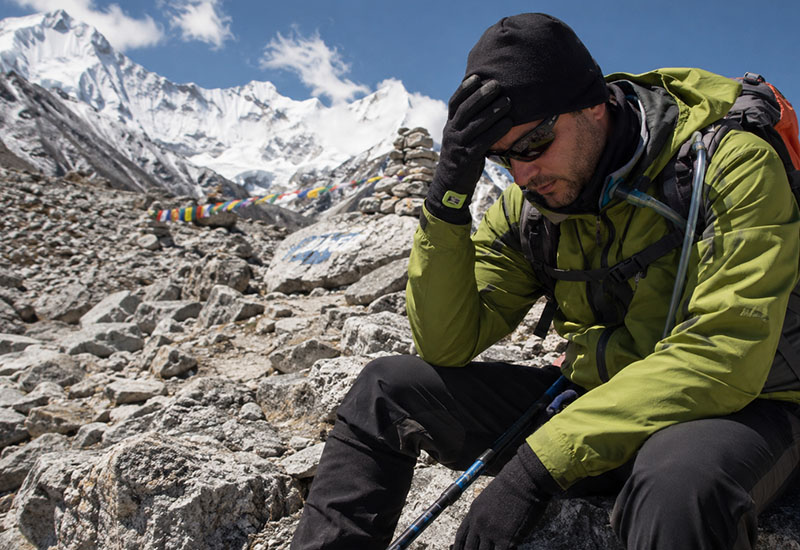
Print this checklist and carry it in your day pack. Share it with your trekking partner and guide. If you or anyone in your group experiences any red-flag symptom, act on it immediately.
| Symptom | What to Do |
| Headache (mild) | Rest, hydrate, take paracetamol. Do NOT ascend until resolved. |
| Fatigue / poor sleep | Normal at altitude. Rest more, stay hydrated. |
| Loss of appetite | Eat small, carb-rich meals. Avoid alcohol. |
| Persistent vomiting | STOP ascending. Descend 300-500 m immediately. |
| Confusion or disorientation | MEDICAL EMERGENCY. Descend NOW + administer Dexamethasone. |
| Breathlessness at rest | STOP. Possible HAPE. Emergency descent required. |
| Ataxia (loss of balance) | STOP. Possible HACE. Descend immediately. |
| Blue-tinged lips or fingertips | EMERGENCY. HAPE. Use supplemental oxygen + descend. |
The decision rule: If in doubt, go down. You can always re-ascend once symptoms fully resolve. You cannot undo HAPE or HACE that has been ignored.
What Are the Emergency Options on the EBC Trek Route?
The EBC route is not a remote wilderness track – there are rescue infrastructure and medical resources along the trail, though options thin out above Namche.
Himalayan Rescue Association (HRA) Clinic – Pheriche
The most important medical facility on the route is the Himalayan Rescue Association clinic at Pheriche (4,371 m / 14,340 ft), open during trekking season (roughly March-May and October-November). They provide altitude sickness consultations (small fee), and their daily informational talks are genuinely worth attending. The clinic also operates a satellite clinic at Manang on the Annapurna Circuit.
Helicopter Evacuation
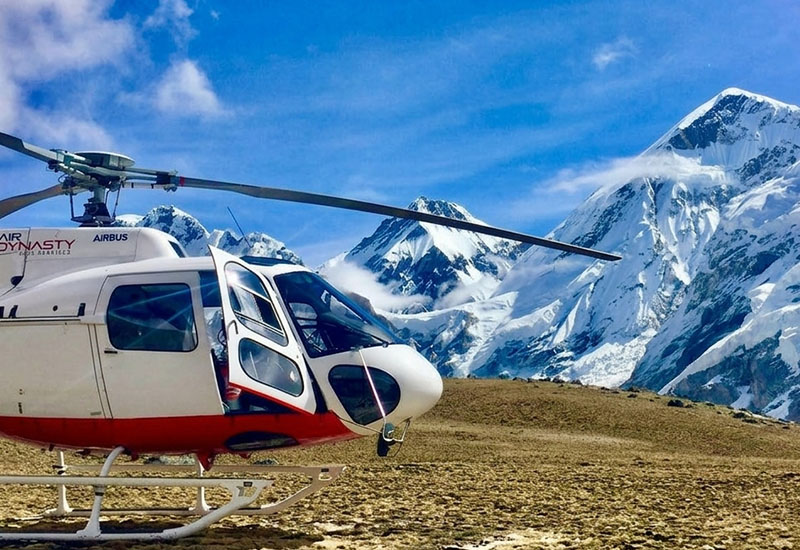
Helicopter rescue is available from most points on the EBC route. Response times vary from 30 minutes to a few hours depending on weather and helicopter availability. Cost ranges from USD 1,500 to USD 5,000+ depending on the landing point and distance. Travel insurance that covers high-altitude helicopter evacuation is not optional – it is essential.
Prime Himalayas strongly recommends World Nomads or Battleface insurance policies for EBC trekkers – ensure your policy covers rescue above 5,000 m.
Gamow Bag / Portable Altitude Chamber
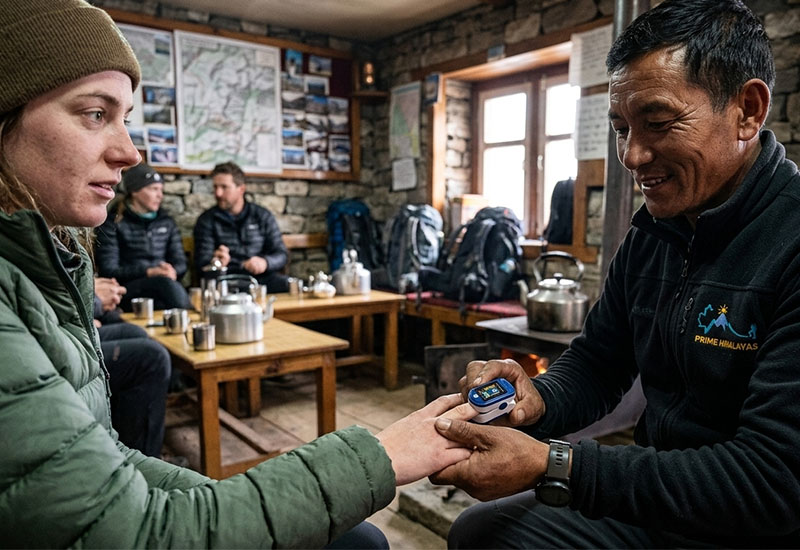
Some teahouses and many guide companies carry a Gamow bag – a portable hyperbaric chamber that simulates descending 1,500 m without moving. It is a temporary emergency measure while waiting for a helicopter or preparing for a physical descent. Prime Himalayas guides on EBC treks carry emergency first-aid kits including a pulse oximeter, which is the single most useful tool for early detection of altitude-related complications.
Pulse Oximetry – Your Early Warning System
A pulse oximeter is a small clip-on device that measures blood oxygen saturation (SpO2). At sea level, normal SpO2 is 95-99%. At Namche (3,440 m), readings of 88-92% are normal. At Gorak Shep (5,140 m), 80-85% is common. If your SpO2 drops sharply from your baseline, or falls below 70%, that is a medical emergency.
Our guides take SpO2 readings of every trekker each morning before departure. If a reading is unusually low or has dropped significantly overnight, the guide will recommend a rest day or descent before symptoms become severe.
What Is the Best Time to Trek EBC to Reduce Altitude Sickness Risk?
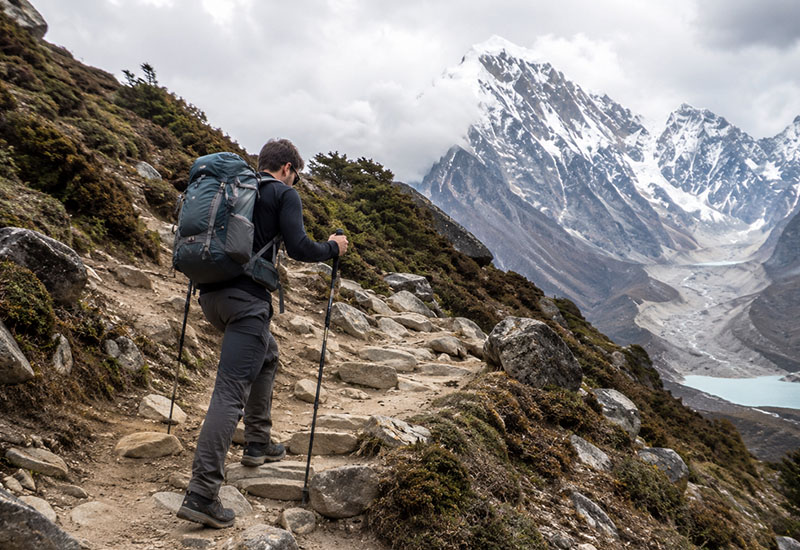
Season affects more than just weather on the Everest Base Camp trek. It also influences how quickly you can safely acclimatize.
Spring (March to May) – Prime Season
Spring is the most popular and safest trekking window. Temperatures are moderate – daytime highs of 5-15 degrees C at lower elevations – and the weather is relatively stable. The jet stream moves off Everest in late April and May, which is why most summit attempts happen then. Clear skies also mean helicopter rescue is more reliably available.
Autumn (September to November) – Equally Good
Post-monsoon autumn offers crystal-clear visibility and stable weather. October is widely considered the single best month for EBC trekking. Temperatures are colder than spring but the air is exceptionally clear. The mountain paths are well-established and trails are well-populated, meaning help is easier to find in an emergency.
Winter (December to February) – For Experienced Trekkers Only
Technically possible but demanding. Temperatures drop to -20 degrees C or lower at high camps. The cold can exacerbate altitude symptoms and rescue logistics become harder. Not recommended for first-time EBC trekkers.
Monsoon (June to August) – Generally Avoided
Heavy rainfall, leeches, poor visibility, and frequent trail closures make the monsoon season unsuitable for most EBC trekkers. The rain also increases landslide risk on approach routes.
For a full month-by-month breakdown of conditions on the route, read our guide on the best time to trek Everest Base Camp.
Practical Altitude Sickness Tips From Our EBC Guides
Our Sherpa guides at Prime Himalayas have walked the Everest Base Camp route hundreds of times. These are the real-world habits they share with every trekker:
- Start slow on day one out of Lukla. The trail from Lukla to Phakding (2,610 m) is mostly downhill – a perfect gentle introduction. Do not rush it.
- Drink before you feel thirsty. Thirst sensation is blunted at altitude. Set a reminder on your watch to drink water every 30-45 minutes on the trail.
- Sleep at the lower end of teahouse options when possible. At Namche, some lodges are at 3,440 m and some are at 3,550 m. Sleep at the lower one on your first night.
- Use the Gamow bag for the first-signs of HAPE or HACE while awaiting evacuation – do not rely on it as a substitute for descent.
- Tell your guide immediately if you feel unwell. There is no shame in admitting symptoms. Guides cannot help what they do not know.
- Avoid sleeping pills. Benzodiazepines suppress breathing during sleep and worsen altitude-induced hypoxia.
- Garlic soup is served at teahouses throughout the Khumbu and is widely considered by Sherpa guides to aid acclimatization. The evidence is anecdotal but it does not hurt.
- Keep your rest days genuinely restful in the morning but active in the afternoon. A 2-3 hour hike uphill followed by a return to your lower sleeping altitude is the ideal pattern.
Before You Go: Essential Planning Resources
Planning what to pack? Our comprehensive Everest Base Camp trek packing list covers clothing layers, footwear, first-aid kit essentials, and the altitude-specific gear you should not leave behind.
Thinking about where to sleep and eat on the route? Read our EBC food and accommodation guide for teahouse standards, menu options, and what to expect at each major stop.
Frequently Asked Questions About Altitude Sickness on EBC Trek
The most effective prevention is a slow, structured ascent with mandatory rest days at Namche Bazaar (3,440 m) and Dingboche (4,410 m). Drink 3-4 litres of water per day, avoid alcohol, eat carbohydrate-rich meals, and never ascend with active AMS symptoms. Some trekkers also take Diamox (acetazolamide) 125 mg twice daily, started 24-48 hours before ascending above 2,500 m – consult your doctor before the trek.
The primary symptom of AMS is a persistent headache. Supporting symptoms include nausea, fatigue, poor sleep, loss of appetite, and dizziness. More severe altitude illness (HAPE or HACE) presents with breathlessness at rest, confusion, loss of balance, or a persistent cough – these are medical emergencies requiring immediate descent.
Symptoms can begin above 2,500 m (8,202 ft) but most trekkers first notice them at Namche Bazaar (3,440 m / 11,286 ft) or Tengboche (3,860 m / 12,664 ft). Serious risk increases significantly above 4,000 m. At Gorak Shep (5,140 m) and EBC (5,364 m), virtually all trekkers experience some physiological effects of altitude.
Many trekkers complete the EBC route without significant AMS by following a proper acclimatization schedule. However, there is no guaranteed way to avoid altitude effects entirely. The key is managing the ascent rate, recognizing early symptoms, and being willing to rest or descend when needed. Most trekkers who turn back early did so because they tried to move too fast.
Diamox is not required for EBC trekking but can be beneficial for trekkers with a history of AMS, those on a tight schedule, or those ascending rapidly. It is not a substitute for proper acclimatization. The decision should be made in consultation with a doctor before your trip. Most trekkers who follow a standard 12-14 day itinerary with proper rest days do not need medication.
If you develop severe AMS, HAPE, or HACE at or near EBC, the protocol is immediate descent – even a few hundred metres makes a significant difference. Your guide should administer Dexamethasone (for HACE) or help use a Gamow bag if available. A helicopter evacuation can be arranged to Lukla or Kathmandu. This is why comprehensive travel insurance covering high-altitude helicopter rescue is essential for all EBC trekkers.
Final Thoughts
Altitude sickness on the Everest Base Camp trek is real, common, and serious – but it is also largely manageable with the right preparation and the right support team. The trekkers who struggle most are those who try to rush a journey the mountain was never designed to accommodate quickly.
Follow the acclimatization schedule. Drink water. Listen to your body. Tell your guide what you feel. And choose an operator whose guides are trained in wilderness first aid and altitude medicine – not just licensed to walk the trail.
At Prime Himalayas, our Sherpa guides carry pulse oximeters, emergency medication kits, and satellite communication on every EBC trek. We build acclimatization rest days into every itinerary, and we will never pressure a trekker to ascend when symptoms suggest they should rest. The summit will be there when you are ready.
Plan Your Everest Base Camp Trek with Confidence
Our local guides in Kathmandu know every step of the EBC route and will customize your itinerary with the right acclimatization days built in – so altitude sickness doesn’t end your adventure early.