
The best time to trek Mardi Himal is during autumn (late September to November) or spring (March to May), when skies stay clear and daytime temperatures at High Camp sit around 5-15°C (41-59°F). October is the single strongest month for guaranteed mountain views, while April rewards trekkers with blooming rhododendron forests. Monsoon (June-August) and deep winter (late December-February) are both trekkable, but each comes with a real trade-off in visibility or trail conditions that’s worth knowing before you book.
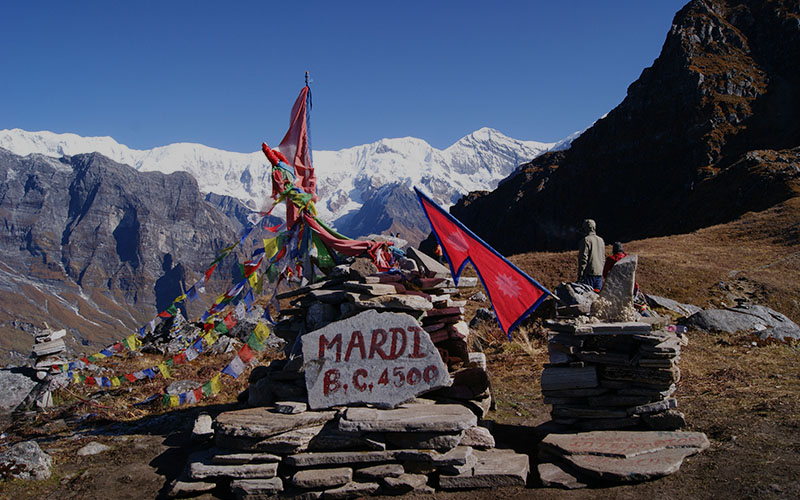
Mardi Himal sits just southeast of the main Annapurna massif, and its ridgeline viewpoint at 4,500m (14,764ft) delivers some of the closest views of Machhapuchhre (Fishtail) and Annapurna South of any trek in Nepal. Because the route climbs fast and camps sit on exposed ridges rather than in forest, the weather window matters here more than it does on longer, tree-lined trails. This guide breaks the year down month by month – temperature, rain, visibility, and crowds – so you can pick dates that match the trip you actually want.
What Is the Best Time to Trek Mardi Himal?
The best time to trek Mardi Himal is autumn (late September through November) or spring (March through May). Both seasons bring stable weather, daytime temperatures of roughly 10-18°C (50-64°F) at lower camps, and the clearest mountain views of the year.
Outside those two windows, the shoulder weeks – early September, late November, and early March – are worth considering too. They carry slightly more weather risk but far fewer trekkers on the trail and in the teahouses.
Guide tip: our guides at Prime Himalayas tell first-time trekkers to book late September or October if photographs matter more to you than solitude. It is the single most reliable four-week window on this route, and our Mardi Himal Trek itinerary is built around exactly that window for most departures.
If solitude matters more than certainty, late spring (early May) or the winter shoulder (late February) both trade a bit of visibility for empty trails and discounted teahouse rooms.
What Is the Mardi Himal Trek Weather Like Month by Month?
Temperatures on Mardi Himal swing fast because the trek gains over 2,700m (8,858ft) of elevation in three days. The table below uses Low Camp (2,970m/9,743ft) for daytime reference and High Camp (3,580m/11,745ft) for night-time reference, since that’s where most trekkers sleep before the final push to Base Camp.
| Month | Day Temp (Low Camp, ~2,970m/9,743ft) | Night Temp (High Camp, ~3,580m/11,745ft) | Rain/Snow | Visibility | Crowd Level |
| Dec | 5-8°C (41-46°F) | -8 to -10°C (14-18°F) | First snow above 3,000m possible | Good | Low |
| Jan | 4-7°C (39-45°F) | -10 to -12°C (10-14°F) | Occasional snow | Good, hazy mornings | Low |
| Feb | 6-9°C (43-48°F) | -8 to -10°C (14-18°F) | Snow melting | Good | Low-moderate |
| Mar | 10-13°C (50-55°F) | -4 to -6°C (21-25°F) | Occasional light showers | Good | Moderate |
| Apr | 13-16°C (55-61°F) | -2 to 2°C (28-36°F) | Rhododendrons bloom, brief showers | Good mornings, clouds build by noon | High |
| May | 15-18°C (59-64°F) | 2-5°C (36-41°F) | Pre-monsoon haze, occasional storms | Fair, best before 10am | Moderate |
| Jun | 18-20°C (64-68°F) | 6-9°C (43-48°F) | Monsoon onset, daily rain | Poor, cloud cover | Low |
| Jul | 18-21°C (64-70°F) | 7-10°C (45-50°F) | Heavy rain, leeches below 3,000m | Poor | Low |
| Aug | 18-20°C (64-68°F) | 6-9°C (43-48°F) | Rain continues | Poor | Low |
| Sep | 14-17°C (57-63°F) | 2-5°C (36-41°F) | Rain tapers off by mid-month | Improving through the month | Building |
| Oct | 12-15°C (54-59°F) | 0-3°C (32-37°F) | Minimal rain | Excellent, best of the year | Very high |
| Nov | 8-12°C (46-54°F) | -4 to -2°C (25-28°F) | Dry, clear | Excellent | High |
Guide tip: trekkers who underestimate the night temperature at High Camp are the ones who show up cold and cranky for the 5 a.m. summit push. Our guides tell people to pack for -10°C (14°F) even in a ‘warm’ month like April – the ridge has no tree cover to block the wind.
Should You Trek Mardi Himal in Spring or Autumn?
Both spring and autumn work well, but they suit slightly different trekkers. Spring rewards you with flowering rhododendron forests below 3,000m; autumn rewards you with the sharpest, most reliable mountain views of the year.
| Factor | Spring (Mar-May) | Autumn (Sep-Nov) |
| Trail conditions | Dry lower trail, occasional mud from short showers | Dry throughout, firmest footing of the year |
| High Camp night temp | -2 to -6°C (21-28°F) | -4 to 0°C (25-32°F) |
| Visibility | Clear mornings, afternoon cloud build-up | Clear most of the day, especially October-November |
| Crowd level | Moderate to high, peaks mid-April | High to very high, peaks October |
| Unique highlight | Rhododendron and magnolia forests in bloom | Festival season (Dashain/Tihar) and the sharpest mountain views |
| Best sub-window | Early to mid-April | Mid-October to mid-November |
If you can only pick one season, choose autumn for the views and spring for the forest scenery. Trekkers doing Mardi Himal alongside a longer Annapurna trip often find it useful to compare against our Annapurna Base Camp seasonal guide, since the two routes share the same weather patterns for most of the year.
What Is Mardi Himal Like in October?
October is the strongest single month on the Mardi Himal calendar. Rain has stopped, dust hasn’t built up yet, and the sky over Annapurna South and Machhapuchhre stays clear from sunrise to late afternoon on most days.
It’s also the busiest month. October overlaps with Nepal’s Dashain and Tihar festival season, which means teahouses at Low Camp and High Camp fill up fast, and some smaller lodges close briefly so families can travel home to celebrate.
Guide tip: if you’re set on an October date, book your High Camp lodging at least three to four weeks out. Our guides have watched trekkers arrive at 4pm in peak October to find every room at High Camp already taken.
Can You Trek Mardi Himal During Monsoon (June-August)?
Yes, but expect daily afternoon rain, muddy trail below 3,000m, and cloud cover that hides the mountains for most of the day. Leeches are common on the lower, forested sections between Kande and Forest Camp during the wettest weeks of July and August.
The upper ridge above Low Camp gets less rain than the valley floor, and early risers sometimes catch a clear 20-30 minute window right at dawn before clouds roll back in. Monsoon isn’t the season to choose for guaranteed views, but it is the quietest and cheapest time to walk the route if flexibility and budget matter more than photographs.
What Are Winter Conditions Like on Mardi Himal (December-February)?
Winter brings cold, clear days and genuinely cold nights – High Camp regularly drops to -8 to -12°C (10-18°F) after dark. Snow above 3,000m is common from late December onward, and in heavier snow years the final stretch between High Camp and Base Camp can be temporarily blocked until a local crew clears the trail.
Crowds thin out dramatically, and teahouse rates often drop. Trekkers who come prepared – a sleeping bag rated to at least -15°C (5°F), an insulated jacket, and gaiters – tend to enjoy winter more than they expect.
Guide tip: call ahead before a winter departure to confirm which teahouses above Low Camp are open that week. Not every lodge stays open through January, and our team checks this before we confirm any winter booking.
Which Month Gives the Best Mountain Views of Annapurna South and Fishtail?
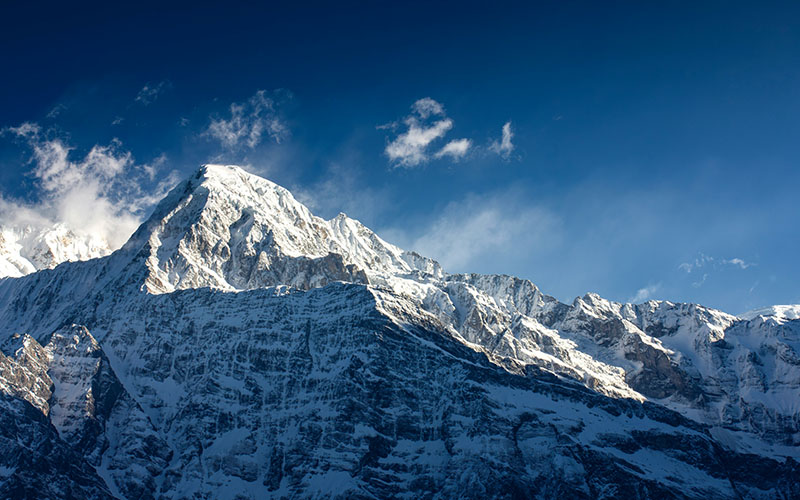
October gives the best mountain views, narrowly ahead of November. Both months combine low humidity, minimal cloud build-up, and stable high-pressure weather systems that keep Annapurna South, Hiunchuli, and Machhapuchhre visible from Low Camp all the way to Base Camp.
April is the strongest second choice if you want mountain views alongside blooming rhododendron forests, though afternoon cloud tends to build in by midday more often than it does in October.
Frequently Asked Questions
What is the best time to trek Mardi Himal?
The best time is autumn (late September to November) or spring (March to May), when skies are clearest and trail conditions are driest. October is the single best month for mountain views.
Is the Mardi Himal trek possible in winter?
Yes. Winter (December-February) is trekkable with proper cold-weather gear, though snow above 3,000m is common and some teahouses close for the season. Crowds are lowest during these months.
How cold does it get at Mardi Himal High Camp?
High Camp (3,580m/11,745ft) typically drops to -4 to -12°C (10-25°F) overnight depending on the month, with the coldest nights in January. Even in spring and autumn, pack for temperatures well below freezing.
Is the Mardi Himal trek doable during monsoon season?
Yes, but expect daily rain, muddy trail below 3,000m, leeches on the lower forested sections, and cloud cover that blocks most mountain views. It’s the quietest and cheapest season, not the clearest.
Do I need a guide for the Mardi Himal trek in 2026?
A licensed guide is now required for foreign trekkers on Mardi Himal under Nepal’s guide regulations, alongside the standard ACAP permit. Booking through a registered operator like Prime Himalayas handles the guide requirement and permit paperwork together.
How many days does the Mardi Himal trek take?
Most itineraries run 5 days from Pokhara, though the route can be shortened to 3-4 days or extended and combined with Ghorepani Poon Hill for trekkers who want a longer loop.
Time Your Mardi Himal Trek Right
Whether you want October’s postcard skies or April’s rhododendron trails, our guides can lock in the dates, permits, and teahouses that match the season you’re after.
→ Get Your Free Itinerary